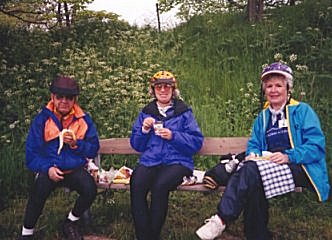
Introduction:
My friends, Norma and Joan and I decided to go to Denmark for this year’s bicycle tour; we had all met in a 1998 trip to France. I have been practicing on regular basis since last year. I bike with my club and go frequently on my own. I do this all year around since the southern weather offers mild temperatures in the winter. I feel that I am ready to go with an Elderhostel group just about anytime. However, I had not practiced my usual riding a month before this trip because I went to Jordan for two weeks (April 20 - May 6) and went to my daughter’s (Yara’s ) graduation at UNC in Chapel Hill, North Carolina, on May 16. I was mentally and physically ready, nevertheless.
With Norma and Joan
On May 20 I flew to Newark as the gateway city and met Norma and Joan. We also met a few other participants whom we recognized by their Elderhostel tags attached to hand luggage. We all got to Copenhagen the following morning where we were met by our guide, Ida (pronounced eeda), a 67 year old Dane who looks much younger than her age.
The Group:
We were 23 people about equally divided between the sexes, some of whom knew one another and came together as a group, like Norma, Joan, and I did. The group is as usual in such gathering; jovial, energetic, and collegial. It is fun to be with a professional bunch like this who are physically fit, financially sound, and with good minds.
Joan Miano
Plainfield, CT
Joan works in the superintendent office of the school system. I have
known her from last year’s trip to France.
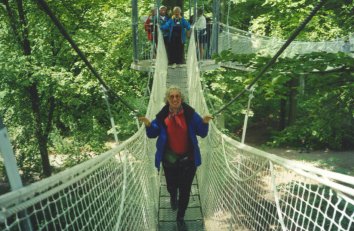 Norma
Norma
Norma Van Felix
Stockbridge, MA
Norma is a retired professor, She, Joan and I went together on this
trip. We met last year when we rode in the Loire Valley in France.
Gene Baus
Waukesha, WI
Dentist and a strong rider.
Ron Johnson
Sun City, AZ
Boeing manufacturing engineer.
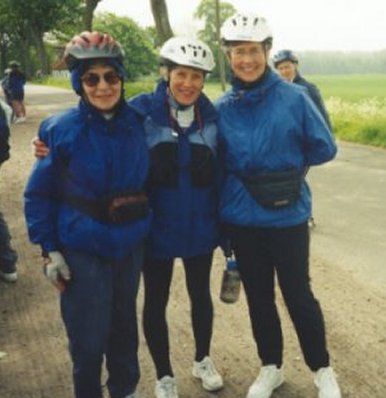
Shirley, Nancy and Mary Sue
Nancy Copeland
Bronxville, NY
A system analyst. She is light and a strong biker, and get off the
saddle a lot.
Marge Ewers 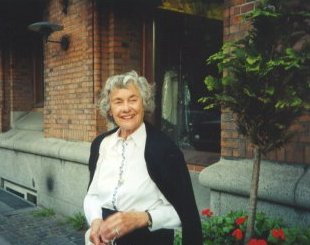 Marge
Marge
Denver, Ca
A 77 year old housewife. She swims and plays golf. A good biker.
Mary Leu Dietz
Spring Park, MN
Hospice nurse. She is a good natured lady.
Mary V. Hoffman
South Euclid, OH
Chemist, at GE. She is a member of Cleveland Club.
Fred Voltz
Englewood, CO
FBI agent. Now has an investigation office. He is an old friend of
Gentry.
Bruce, Fred, and Gentry
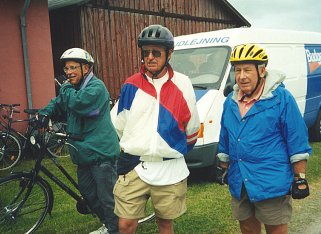 Bruce,
Fred, and Gentry
Bruce,
Fred, and Gentry
Gentry Lowe
Williamsburg, VA
Gentry was an FBI agent; works as a security officer for a ship building
company. A very sociable man.
Joe & Pat Jensen
Denver, Co
Joe is a psychiatrist, worked 20 years in So. Africa. Pat’s father
was a glassblower.
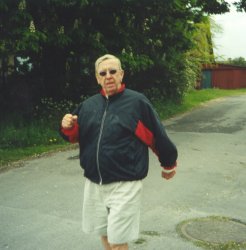 Jim
Jim
Ruth & Jim Weaver
Minneapolis, MN
Jim was a lawyer but worked as a financial off at General Mills. Ruth
was a teacher and she leads cyclists in her town.
Rafael and Shirley Brand
Waynesboro, VA
Rafael was an ME at Dupont, worked on textiles. Shirley was a hospital
lab technician.
Bob & Lynn Young
Estes Park, CO
Bob was a professor of economics at Colorado State; water resources.
Lynn is a volunteer for the League of Women Voters.
Brad & Mary Sue Rehaer
Estes Park, CO
Brad was a preacher; he was our herder. Mary Sue is 68 year old and
looks very young.
Bruce and Barbara Reyle
Fairfax, VA
Bruce is a real estate appraisal, and Barbara is a school librarian.
The Guide:
Ida Rasmussen
Denmark
Our 67 year old (my age) leader-guide; a strong biker. She was a teacher
and traveled around the world.
The Driver:
Henning Molliebak
Denmark
Our driver; excellent disposition, and helpful. He was an engineer
on a ship. He gave us a nightly report on the weather, stock market and
sports.
The Trek :
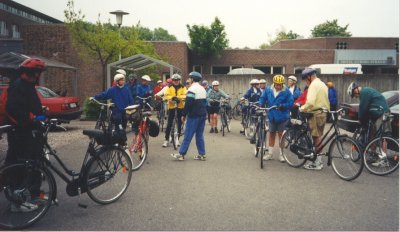
We arrived in the morning of Friday May 21, 1999 at Copenhagen’s airport. We went by bus to the city of Menstrup where we stayed two days. There are many towns whose names end with "strup", "trup", or "rup". They all mean a clearing. The land was originally full of forests and people had to clear it to settle. We visited a glass blowing factory, which was built up over the years and became a large collection of buildings of different styles. There were many workers, much more than one would expect in an industrial area of this size. Each worker had one job to do, all were handling dangerous molten glass, and therefore they were very careful. They worked in a coordinated and harmonious way, like robots. The majority of workers were artisans. Many of them were smokers. One worker would take the cigarette out of his mouth then blow in a tube to form the glass then put the cigarette back where it was. There was a large shed for parking , not cars but bicycles, which are very common in the whole country. In a large city like Copenhagen, one would see thousands of very well used bicycles, none of which is worth many Kroner . The currency is Kroner which means crown and the smallest unit, the Ohr which means ear.
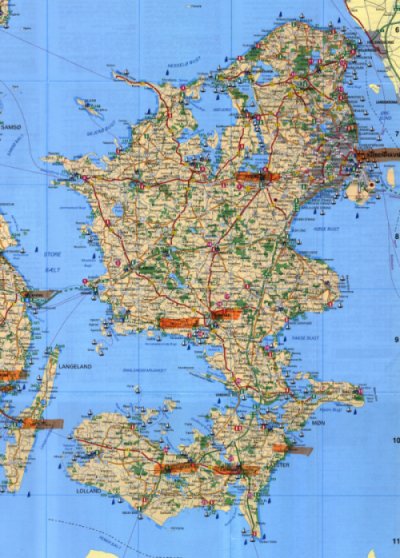
For the coming days we traveled by bicycle mainly in four of the 450
islands that make up Denmark. Bike paths were well marked and numbered.
There are about ten national bike paths numbered in red and local paths
numbered in white. The first island was Zeeland where Copenhagen is located,
then we crossed a long bridge by bus to Funen, by ferry to Aero, by another
ferry to Lolland and finally by bicycle back to Zeeland.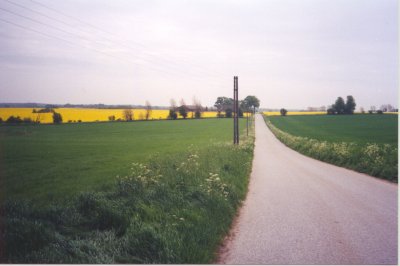 Funen,
the Garden of Denmark
Funen,
the Garden of Denmark
We saw expansive fields of winter wheat, rape seed, and beets, which are the major crops. They produce sugar from beets which is exported to Europe. The rape seed is used to extract canola oil and feed for the livestock. The wheat is also exported. The wheat straw is burned to generate hot water which is distributed to homes and businesses by pipes like drinking water. One town was fully supplied by such hot water. They have many hog farms where the animals live in big barns, and not outside. Therefore, the smell is everywhere in the country side, even the wind did not disperse or dilute it. A story was told to us that the Queen wanted to visit a farm. The designated farmer was coached to say "manure". When the Queen came, the farmer was describing the farm operation to her. He also brought her attention not to step in the manure, "shit , you know!" he said.
The ride was not easy because of the head wind, which seems to be against
us most of the time. The strong wind induced the Danes to build windmill
electric generators. We stopped for rest every 30 or 45 minute rides
along country roads which are asphalt or packed gravel. We took back
roads to avoid traffic. Motorist were very polite; they would give the
riders plenty of room or simply stop when there was an incoming traffic.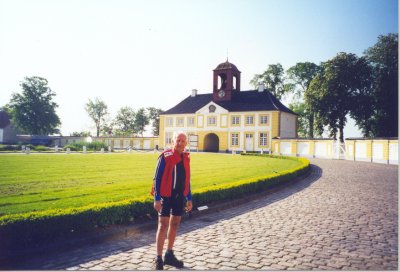
On the island of Funen, we stayed in Svenborg. "Borg is another common
name for cities which means city. Many places have usual names like animals.
Svenborg means "swine city", and one street in Copenhagen is named "No
Neighbors." This small port city was very beautiful. Luckily we stayed
two days in it and I loved walking around. The common color of houses and
other buildings on this island is yellow and sometimes orange red. These
colors are extracted for the soil. On Zeeland, the common color is white.
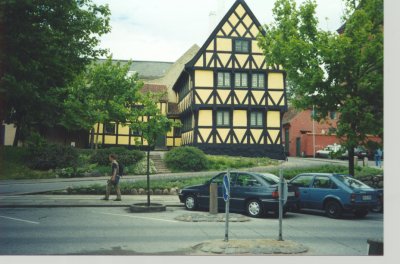 Yellow
house in Svenborg
Yellow
house in Svenborg
We had lunch in a pub by the sea port. The usual food in Denmark is herring which is prepared in several different ways, pickled, with sour cream, with tomato sauce, or fried; but always with onions. The Danes drink shnaps and beer, not wine, and ate the herring with black bread. Water in the past was not safe to drink, so they made and drank beer.
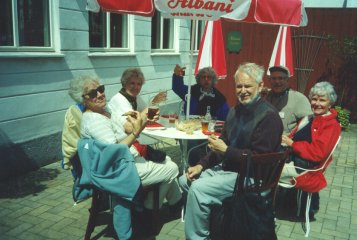 Lunch
on the wharf in Svenborg
Lunch
on the wharf in Svenborg
The Danes have low opinion of their politicians. In Svenborg, a sculpture was given to the city. It is a rock being pulled down by politicians and of course they are not going anywhere. The politicians are depicted as big fat bellied men with small heads, indicating lack of intelligence.
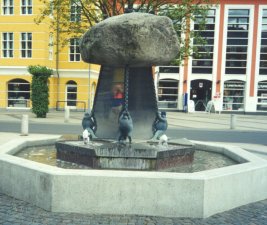 Statue
ot the Rock and the Fat Politicians
Statue
ot the Rock and the Fat Politicians
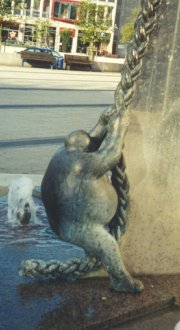 A
Fat Politician
A
Fat Politician
From Svenborg we biked to the town of Faaborg where we boarded
a large ferry to Aero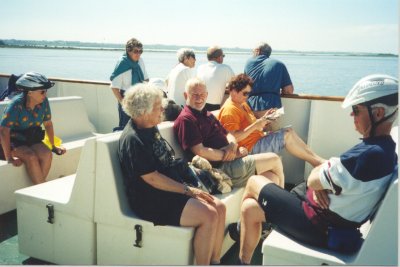 This island has three major little towns; each town has a special ferry
between the individual town and Faaborg. People of one town do not travel
on the ferries of the other town. The peoples do not associate with one
another or even intermarry. The Danes are stubborn. The Viking mentality
seems to influence that attitude. The last town in Aero to which we bicycled
was Aroskoking. It is an old well-kept small town of freshly painted houses
with small quaint doors. The town described as a fairy tale town that inspired
Hans Christian Anderson, the famous fairy tale Danish writer. [pix
of doors]
This island has three major little towns; each town has a special ferry
between the individual town and Faaborg. People of one town do not travel
on the ferries of the other town. The peoples do not associate with one
another or even intermarry. The Danes are stubborn. The Viking mentality
seems to influence that attitude. The last town in Aero to which we bicycled
was Aroskoking. It is an old well-kept small town of freshly painted houses
with small quaint doors. The town described as a fairy tale town that inspired
Hans Christian Anderson, the famous fairy tale Danish writer. [pix
of doors]
The colorful Aroskoking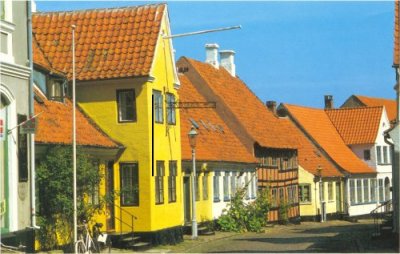
Aroskoking has a famous bottle ship museum. The museum has also a collection
of porcelain dogs which were used by prostitutes. It was not against the
law to offer the service as long as it was not for money. Prostitutes instead
sold porcelain dogs to the customers at inflated prices, most of the customers
threw the dogs into the sea. It was well known that the shores were full
of porcelain dogs. Prostitutes also used the dogs as signals. They would
place two dogs in the window facing each others to indicate that the coast
is clear; and if they were placed back to back, it told prospective customers
to stay out. Some customers took the dogs as gifts to their wives, who
later learned the same trick. They would place the dogs face to face to
tell their lovers to come in.
We visited other towns going along bike paths or one lane country roads. Bike paths are invariably packed gravel, the entrances to which are blocked by zigzag barriers to exclude cars and motorcycles. The paths are generally thread through forests and away from main roads as short cuts between towns. They are safe and it was not unusual to see a lone girl biker in the forest.
The last leg of our excursion lead us to Copenhagen (the Danes pronounce it coopen hown) by bus. We spent the last two days there. Unlike most other capitals, Copenhagen has no tall buildings. It is an old town and has kept its colorful characteristic, although it was burned two or three times in its history. The most striking thing was the number of bicycles on the streets; they are like ants. On the streets, in front of stores, restaurants, and pubs. Some establishments do not allow bikes inside, and therefore put special no- bicycles signs on their doors. Bicycles are single speed, because the city is very flat. It seems that bicycles eliminated traffic congestion and pollution; the air is clean. The city is a harbor town and the sea is their life for transportation. Large ferries go to the other islands. Ferries dock and depart without the fanfare that accompany ships in other world cities. The pilot eases the ferry into a dock like parking a car in a garage but with a very small ground crew. The Danes have been sea faring people since the beginning of their time.
Weather:
The weather is unpredictable. One newspaper once wrote that the Meteorological Department said "they don’t know what it will be like tomorrow, but it is expected to be rainy, sunny at times, wind blowing from various directions, and without any certainty." The biggest problem we encountered was the wind, which made cycling hard, like climbing hills all the time. The natives are prepared for the weather conditions. They dress up warmly when they travel by ferry or water taxi, and lightly when they walk around town.
Windmills:
[Pix windmill]
The country’s weather makes it convenient for wind power. The government
encourages the building of windmill generators through tax incentives.
Individuals or cooperatives build one or several windmills and the generated
energy is fed into the national power grid. Investors recoup their expense
in about seven years. Generators yield anywhere from 600 KW to about 1.5
MW. Currently these windmills generate 10% of the country’s energy need,
and the government hopes to reach 20%. The mills have three blades each
of which is about 60 feet long, and located in the open country side. They
do not look any worse than cellular phone towers.
The Vikings:
The Vikings are the Danes ancestors. They were sea marauders traveling mainly along the rivers and seas invading other peoples and capture their bounty. They traveled all the way to Russia and the Mediterranean. It is said that a woman asked her husband for a dress and he said "we are not going to Paris this year [for a raid] and wait till next year." The handicraft was well known, and they traded in Amber (the gold of Scandinavia) which comes in different colors.
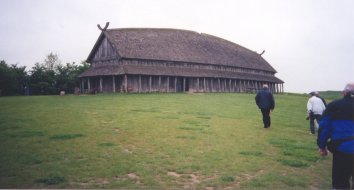 They lived
in an orderly situated houses, each house was built like a ship, oval shape,
and covered with thatch. The thatch comes from a special sea grass that
grows along the water edge. Many houses still have thatch roofs which can
last 50 years. The thatch roof is about ten inches thick and without decking
making it visible from inside. Some people add a false ceiling on the inside.
They lived
in an orderly situated houses, each house was built like a ship, oval shape,
and covered with thatch. The thatch comes from a special sea grass that
grows along the water edge. Many houses still have thatch roofs which can
last 50 years. The thatch roof is about ten inches thick and without decking
making it visible from inside. Some people add a false ceiling on the inside. 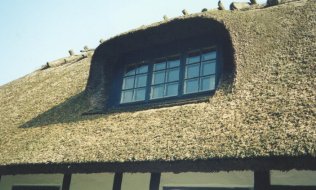
The Vikings were of course a tough group, and this affected the Danes
behavior, like the cowboys did in America. The national pride is very evident,
like the rough nature of the men. Denmark refused to join the Euro because
of the pride in the Kroner, although they would benefit from the EU market.
The perception of the Viking male is typified in the current Danish seamen,
bearded and mustachioed.
The Resistor Movement:
During the second world war, Denmark decided not to take sides but Germany occupied it anyway. Unlike other occupations, Germany let the local government run the country. The Danish government had no power against Germany and therefore cooperated with the occupiers. A youth movement started resisting the occupation and sabotaged some of the German facilities which were used for the soldiers’ rest and recreation. The Germans forced the government to squash the resistance. The youth concluded that the Danish government had capitulated with the occupation, and the resistance increased. A story was told that the movement sabotaged the railroad and prevented the Germans from travelling toward the end of the war, and that contributed to their defeat. Later research had shown that the incident had no effect on the war and the delay in the soldiers’ travel was not delayed by several days but by a couple of hours. The Danes impressed me with their candor, specially in regards to the stories about the Vikings. They are not embarrassed by saying that such a thing is a myth. Moreover, we were told that only 1% of the people participated in the resistance, while in France, such movement attracted 5%.
For a long time, we have been told that when the Germans ordered the Jews in Denmark to wear the yellow star on their chests, all the Danes including the Prime Minister wore it too. That did not happen. When the Germans gave such an order, the Prime Minister warned that he and all the government ministers would wear it too. The Occupation then backed down and did not enforce the order.
The Royalty:
The Danes look down at the politicians and the government in general, as depicted by the sculpture in Svenborg. Maybe the feeling was caused by the government capitulation to the Germans during the war. They do however go to polls by an overwhelming margin. The Danes however, love their queen and the royal family. Poll after poll showed that people support the family by 95%. Queen Margrethe II does not wear a crown, not even at coronation, nor does she wear royal clothes. The royals are not pompous like the English royalty. The family does not own anything, not even the palace. The royals are not allowed to work for money; they do have government stipends. The Queen’s annual salary is $6 M to take care of all of her needs, which is not a large sum. There seems to be no corruption in the family, and that is one reason for its popularity.
The Danish sovereigns invariably married foreigners. The Queen’s husband is French, and the present crown prince married a Chinese woman. He first dated a Danish model. When she modeled underwear, that was too much for the public to take although they do have very liberal attitude.
The Queen has many constitutional powers, including the appointment of the prime minister, but she does not exercise them. Any law passed by the majority of the parliament, she approves it, even if she knew that such a law is not wise. She does not even express opinions. The reason for this is the respect for democracy and also for the selfish cause of protecting her popular position as queen.
The Parliament (Folketing):
Anyone can run for the parliament. A comedian who is an alcoholic and a drug abuser has been elected more than once. He jokes about the parliament members and describe them as lazy and boring. He formed his own party of the Union of Consciously Work-Hating People. He buys beer and distributes it to the people. He pokes fun of the British snotty Parliament.
Many members of the parliament do not attend the deliberations, not because they are lazy, but they follow the discussion through closed circuit. They feel they do not need to be in the chamber until the vote is taken.
Religion:
The Viking had many gods. When the Christian monks carrying crosses went to the Danish King to preach Christianity, they were killed because they were dirty and dressed like women, in robes, and were talking about someone called Jesus, who looked dirty like them. The Viking believed in adventure, raids, and women. It is believed that monks spread bad rumors about the Viking. In time the king did convert and the people followed. In one period of the country’s history, churches were built in a large number. Although these churches are everywhere now, the attendance is very low. The reason of course is not known but speculations are several. People do not contribute to the church as they do in the US, thus the attachment is not as strong. Moreover, in Denmark, there is a ministry of religion which takes care of the places of worship for Christians and Jews.
Following the Reformation movement, the Danes changed from Catholic to Lutheran which now constitute more than 90% of the people. The Catholic churches were purged of the Catholic icons including those of The Virgin Mary, and became the current Lutheran churches.
People in the past were buried in the church. When the floor was full of graves, they put another layer of dirt and buried more dead. In time, the smell was awful and they had to tear up the floor and throw away all the bones.
In the old capital city of Roskilde, there is the 12th century cathedral where kings and queens are buried. We walked on the graves in the church. The newer ones are entombed in huge marble boxes. One of them was moved from another location, and it was about nine feet long. People thought the old king was very tall, only to find out that he was normal size but put in a large tomb to glorify him.
The Danes:
They are very polite and friendly. It was my old impression that the northern Europeans are gentler than the southern ones. In the hotels, stores, restaurants, and on the street, I found people were kind. It is hard to know if that is the way they are, or they treated us kindly because we were visitors. My guess is that both are true.
In 1912 when the shores of America were opened for immigrants, millions of Europeans immigrated to the US. From Denmark one third of the population did.
Women are mostly blond with very beautiful skin, which is clear and
unblemished. They are also tall, but not skinny. Their femininity does
not match the French women [Link to the French Report here, women ]who
are not as beautiful, however.
The bridge:
Ferries dominate the mode of transportation among the many islands.
Between Zeeland and Funen, the government built the worlds longest bridge
(five miles), until Japan recently built a longer one. Denmark is a country
of 5.5 million people. One does not expect such a country to build such
a massive structure. It may have been possible because Denmark receives
one billion dollars from the EU. The toll we were told, is $30 each way,
which is a very heavy cost to pay. That should prevent people from crossing
and traveling. However the traffic on this two lane bridge seems normal.
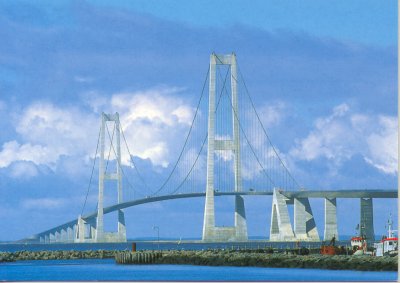
When the bridge was completed in 1998, it was opened to the public
to visit for one weekend only. It was estimated that one quarter million
people crossed the suspension bridge running, biking, walking, or roller-skating
for the first and last time. Now, it is open to automobile traffic only.
That was the reason we did not bicycle over it; we took a bus.
Joan:
 My friends Joan
and Norma decided last fall that we would go bicycling in Denmark, and
luckily we did. Joan and Norma made plans also to extend the trip four
days to spend in Copenhagen. They did not think I would be interested in
staying, going with them to women stores and doing women things and they
were right. At the farewell dinner, they told me that in the morning they
are going to sleep late. I convinced them by insistence, to join us for
the last breakfast, and I was happy they showed up. Joan had in her hand
her fanny pack in which she kept her money, passport, camera, and her watch,
since the band had broke a few days earlier. She put it on the chairs next
to me as she usually did, to go to the buffet to get food. All the people
around us were the members of our group, eating and bidding goodbye to
every one else. Suddenly Joan said "My bag!!" We all looked for it to no
avail. She went to her room and it was not there either. It was a shock
to all of us, since we were all careful especially in a big city like Copenhagen.
Most of us were scheduled to leave at 8:45, and felt helpless in not being
able to help. We left both of them to deal with the problem. We continued
talking about the issue on the plane back to Newark. They stayed the extra
four days, and the following email came from Joan to all of us:
My friends Joan
and Norma decided last fall that we would go bicycling in Denmark, and
luckily we did. Joan and Norma made plans also to extend the trip four
days to spend in Copenhagen. They did not think I would be interested in
staying, going with them to women stores and doing women things and they
were right. At the farewell dinner, they told me that in the morning they
are going to sleep late. I convinced them by insistence, to join us for
the last breakfast, and I was happy they showed up. Joan had in her hand
her fanny pack in which she kept her money, passport, camera, and her watch,
since the band had broke a few days earlier. She put it on the chairs next
to me as she usually did, to go to the buffet to get food. All the people
around us were the members of our group, eating and bidding goodbye to
every one else. Suddenly Joan said "My bag!!" We all looked for it to no
avail. She went to her room and it was not there either. It was a shock
to all of us, since we were all careful especially in a big city like Copenhagen.
Most of us were scheduled to leave at 8:45, and felt helpless in not being
able to help. We left both of them to deal with the problem. We continued
talking about the issue on the plane back to Newark. They stayed the extra
four days, and the following email came from Joan to all of us:
Hi to all and I hope this gets to everyone. the "trip" turned
out to be
quite an experience. and some people who read this already know
the contents
of this email. But after 2 trips to the American Embassy, one
w/Ida and the
second trip with Lena (daughter of owners of hotel), I managed to get
a
temporary passport. good for 3 months which I will have to send along
to a
passport agency along w/birth certificate so that the passport will
be good
for ten years. Thanks to Gentry and the $$ he lent me. Gentry,
"the check
is in the mail!" I used American cash for the passport although' I
could have
used DKK. but I wanted to keep the DKK for lunches and smaller
items.
Thanks, Ned for the loan of DKK. "the check is in the mail" to you,
too.
Anyway, my "cards" got canceled or blocked (Visa, ATT calling
card, ATM
card), and I lost my driver's license, a nice watch that was in my
pouch
because the strap broke and I couldn't wear it on my wrist. So
the
"incident" gave Norma and me a bit of a diversion but we managed to
work in
some sightseeing along the way and to and for. actually we walked
our
calluses off on our way to the Royal Copenhagen factory showroom where
they
sold "seconds" at no bargain price. (we didn't buy anything).
And when we
returned from the embassy, and spoke to the very important desk clerk,
they
felt so sorry for us, they upgraded us to the penthouse for 4 nights.
There
was so much room, we had to shout from one room to another. say
fireworks
on Saturday from Tivoli and also from the celebration of Constitution
Day.
Norma and I heard the Queen speak and the Prime Minister. there was
music
and great stuff going on. everyone was in a great mood. and we
toured the
castle and saw the stables and coaches. heard the New Viking
Jazz Band.
that was great. And to top it all off, in order for Norma and
I to sit
together on the flight home, SAS upgraded our seats to row 4 of the
plane.... business class. we were in our "element" sitting
there like a
couple of "swells". it was fun. Thanks, Ida, for all your
help. Remember
when you are the leader of the pack, don't forget to turn around and
see if
the pack is still behind you! by the way, I am sitting here in
the heat 97F
(35C?? or more). It was good to sleep in the dark! it was strange
to be
waking up when it seemed like it was the middle of the day and it turned
out
to be 4 a.m. Anyway, just to say " all's well that ends well."
Joan
Joan later added the following paragraph:
"when I got to New York (Newark) my luggage was ripped and I had to make a baggage claim to have the airline repair it. Lucky for them I am an easy to get along with person (ha). I took it in my stride. whatever that means... well, it just added some "color" to my trip. c'est la vie as they say in Denmark!!!" joan
Remarks:
I was impressed with the Danes; they are kind. Their blond skin is striking
in clarity. The country is clean but the country side is fowled only by
the pig manure smell. The high wind is normal for this Baltic-Atlantic
region, which made it ideal for windmill electric power generation. We
enjoyed their food, especially the herring. The green fields of wheat and
other crops are as far as the eye could see in every direction. Lastly,
anywhere we biked we invariably ended at the water edge.