 |
 |
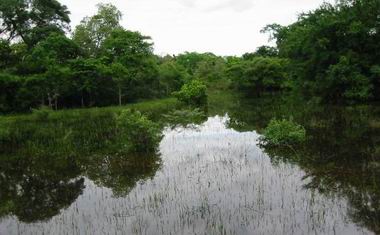
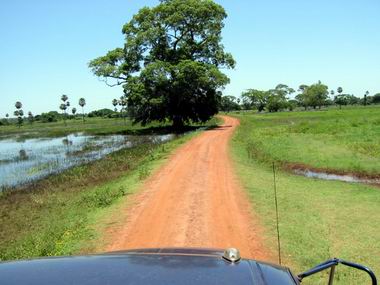
The expansive Pantanal plain is surrounded by mountains. The rainwater runoff brings down sandy soil, which over time covers the whole plain with a layer of red soil. This land however is not very fertile because beneath the sand is red clay, which does not sustain crops. The land therefore is simply used for grazing of livestock, mainly cows.
Although
the Pantanal is commonly referred to as a swamp, it's actually a flood
plain. During the rainy season from November to April, the whole area gets
inundated by the waters of the Paraguay River and its tributaries. The
annual rainfall from October to March in the Pantanal is between 1,000
– 1,400 mm, which is low with respect to the Amazon basin. But the slope
of the Pantanal plain is only 10 cm/ km, and the river system cannot handle
the rainwater, which overflows the banks and the area transforms into a
sea. Life is then invigorated; trees, fish, birds, animals, crawlers and
mosquitoes all come alive. The area is rich. The Pantanal becomes a life
of plenty.
 |
 |
|
|
|
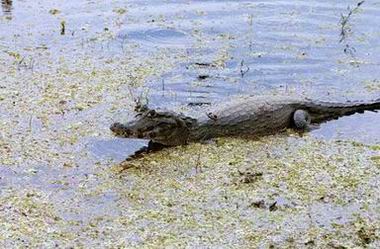
When the wet season ends, the flood plain drains into the Paraguay River, the second longest river in South America, and life begins to wither. The wetland basin turns into dry grasslands. The Pantanal becomes arid and paradoxically the parched land becomes susceptible to fires. Fish retreat to lagoons and ponds. They become easy prey for the Paraguayan caimans and other predators, which thrive even more until these ponds dry up, and then only those that can find deeper waterholes survive. The life cycle begins anew with the next wet period. The Pantanal is a heaven for extensive biodiversity. Its abundance of wildlife makes it "the world's biggest ecological sanctuary."
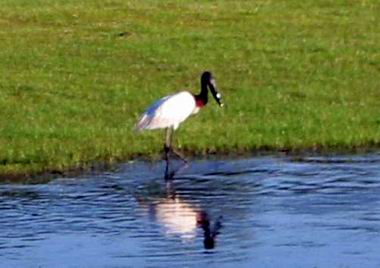
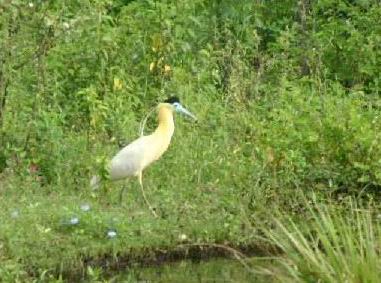
The most prominent feature of wildlife here is the more than 650 species of birds including 26 species of parrots, the largest of which is the stately blue hyacinth macaw, of more than one meter long. Birds are very abundant and beyond imagination. One can see flocks of different species like the heron, stork, ibis, pink spoonbill and the Jabiru with its red neck and black head; a big stork that is the symbol of the Pantanal. The rhea, the South American version of the emu, roams the land freely.
Herds of unusual animals are also seen throughout the area. Species such as jaguar, puma, ocelot, manned wolf, giant anteater, giant armadillo, large marsh deer, peccary (the South American wild pig) and tapir. The anteater has a bad odor, weak hearing and poor eyesight. It navigates by its good sense of smell. Its sticky tongue is half a meter long. The most famous mammal of the area is the capybara (looks like a guinea pig), which is the largest rodent weighing 200 pounds. It feeds on grass and swims underwater to avoid danger. There are many species of reptiles like the Paraguayan caiman, which is still quite prolific despite heavy poaching, and the world's largest snake, the anaconda. The abundance of robust life in the Pantanal indicates a well-balanced ecosystem. Brazilians say: "o Pantanal é vida" – "the Pantanal is life."
The Pantanal is almost entirely privately owned land with many large cattle ranches feeding millions of head of cattle. The owners are becoming more environmentally aware and good stewards of the land. No cities are found in the swampy savannah.
The
Group:
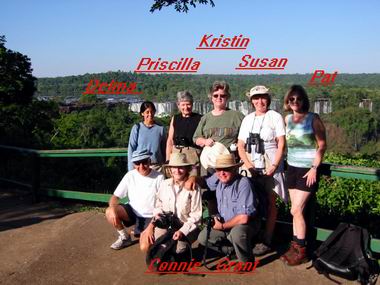
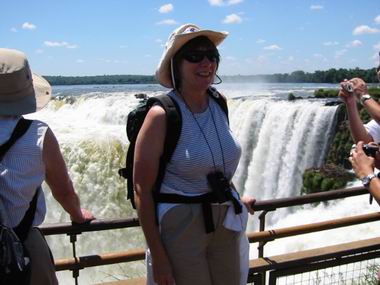
Susan Erickson, Parkton, MD, pathology
(blood banking) nurse at the Greater Baltimore Medical Center.
 |
 |
|
|
|
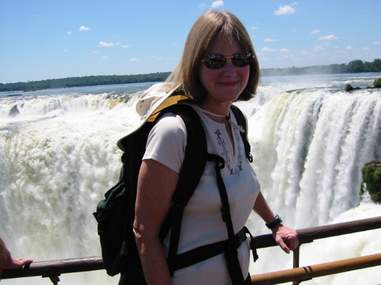
Patricia Sellers, Baltimore, MD, pathology
(hematology) nurse, at the Greater Baltimore Medical Center. Pat and Susan
are friends and travel frequently together.
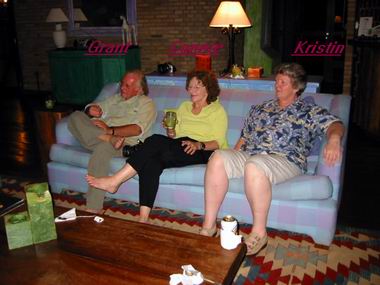
Grant
Reed, Newark, DE, plastic surgeon.
 |
 |
|
|
|
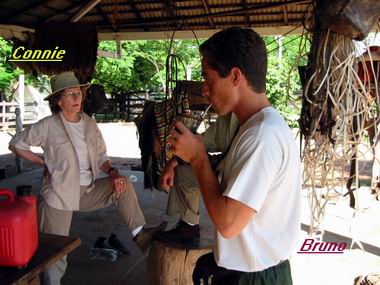
Connie Schappell, Newark, DE, she married Grant two years ago after their spouses passed away. They knew each other at young age.
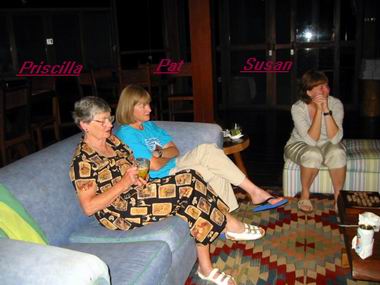
Priscilla (Pat) Long, Mercer Island, WA, lawyer, and a judge, well traveled.
Kristin Tow, San Diego, CA, public relations at San Diego Community College.
Ned Audeh, Huntsville, Alabama, Professor.
The
Travel:
This
refuge is a 20 by 30 kilometer area and is in the southeast part of the
Pantanal. We spent our time in this privately owned and well-cared-for
preserve. The refuge has five lodges, each of which can accommodate a dozen
or fewer visitors. Good meals and other necessities for living, including
swimming pools, were adequately provided. There were no newspapers, television,
telephone or radio available. It was away from cities and busy lives; it
was for those who want to enjoy harmony with nature. The preserve looked
very full of healthy wild life, and I hope it will stay in this pristine
state. The lodge was our headquarters.
 |
 |
